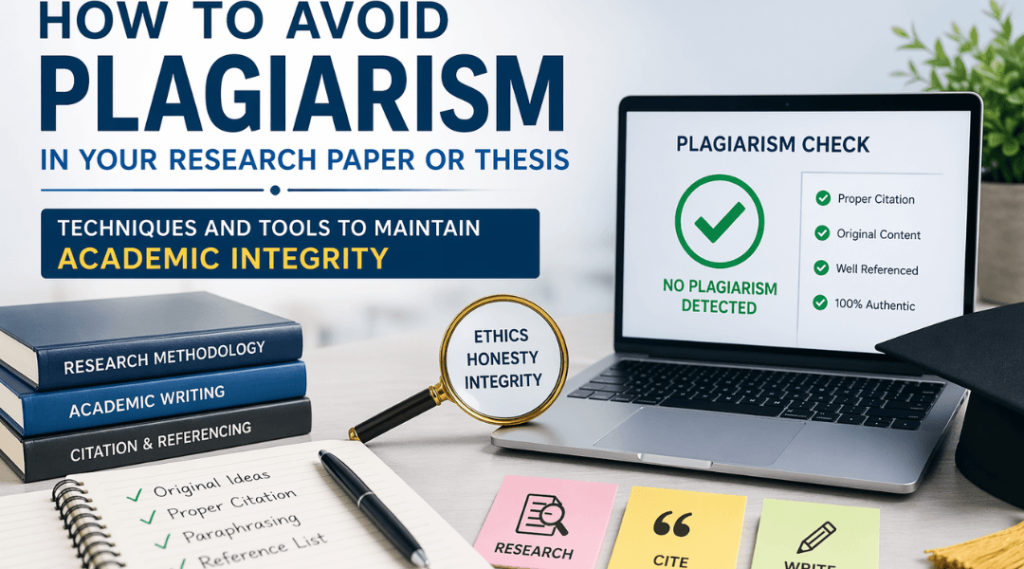
The rapid expansion of artificial intelligence (AI) tools has transformed academic writing, making information more accessible and content generation faster than ever before. While these advancements offer significant benefits, they also raise critical ethical concerns. Among these, plagiarism remains one of the most pressing challenges in academia. Understanding how to avoid plagiarism in a research paper or thesis has become even more essential as AI-generated content blurs the boundaries between original thought and reproduced material.
What Is Plagiarism in the Age of AI?
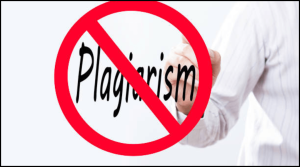
In traditional terms, plagiarism refers to the act of presenting someone else’s ideas, words, or intellectual output as one’s own without proper acknowledgment. In the age of AI, this definition expands to include the uncritical use of AI-generated content without verification, attribution (where required), or intellectual contribution.
AI systems can generate text that appears original but is often derived from patterns in existing data. Submitting such content without proper review or adaptation may constitute a new form of academic dishonesty. Therefore, plagiarism today includes not only copying from human-authored sources but also misrepresenting AI-assisted content as entirely original work.
Academic institutions emphasize that integrity lies not just in avoiding copying, but in demonstrating independent thinking, proper attribution, and transparency in the writing process.
Common Types of Plagiarism
Understanding the common types of plagiarism is essential for preventing it effectively. These include:
- Direct plagiarism: Copying text word-for-word without citation.
- Paraphrasing plagiarism: Rewriting content with minor changes but retaining the original structure and meaning without acknowledgment.
- Self-plagiarism: Reusing previously submitted or published work without disclosure.
- Mosaic plagiarism: Mixing copied phrases with original writing without proper citation.
- Accidental plagiarism: Unintentional failure to cite sources correctly.
- AI-assisted plagiarism: Submitting AI-generated content without meaningful modification or critical input.
Each of these forms violates academic standards and can have serious consequences, including rejection of work or disciplinary action.
Student Practices That Lead to Plagiarism
Despite awareness, many students still struggle with maintaining originality. Several common practices contribute to plagiarism:
- Poor time management: Rushed deadlines often lead students to copy content without proper citation.
- Lack of understanding of citation rules: Confusion about referencing styles increases the likelihood of errors.
- Overreliance on copy-paste methods: Directly inserting text into drafts without proper marking.
- Inadequate paraphrasing skills: Students may unintentionally replicate the structure of original sources.
- Dependence on AI tools: Using AI-generated text without critical evaluation or rewriting.
- Insufficient research skills: Difficulty in synthesizing multiple sources into original arguments.
Recognizing these behaviors is a crucial step in learning how to write plagiarism-free content.
Strategies to Prevent Plagiarism
To effectively avoid plagiarism in a thesis or research paper, students should adopt the following comprehensive strategies:
- Develop a structured research process
Maintain detailed records of all sources consulted. Use note-taking systems that clearly separate direct quotes, paraphrased ideas, and personal insights. - Master proper citation techniques
Learn and consistently apply academic referencing styles such as APA, MLA, or Chicago. Always cite sources for both direct quotes and paraphrased content. - Improve paraphrasing skills
Focus on understanding the original text before rewriting it. Change both wording and sentence structure while preserving the original meaning, and always provide attribution. - Use quotations appropriately
Include quotation marks for exact phrases and provide complete citations. Avoid excessive quoting to maintain originality. - Engage in critical analysis
Instead of merely summarizing sources, evaluate and synthesize them to develop your own arguments. This strengthens originality and academic depth. - Allocate sufficient time for writing
Plan your research and writing schedule to avoid last-minute pressure, which often leads to poor academic practices. - Review and edit thoroughly
Revisit your work to ensure all sources are properly cited and paraphrased. Cross-check references for accuracy. - Use plagiarism detection tools responsibly
These tools help identify similarities but should complement not replace good writing practices. - Acknowledge AI assistance transparently
If AI tools are used, ensure the content is critically evaluated, rewritten, and aligned with institutional guidelines.
These plagiarism prevention techniques are essential for maintaining academic integrity and producing high-quality scholarly work.
Tools to Detect Plagiarism
The following table highlights widely used tools that help ensure originality in academic writing:
| Tool Name | Key Features | Best Use Case |
| Turnitin | Comprehensive database, similarity reports | University submissions |
| Grammarly | Grammar + plagiarism detection | Draft improvement |
| QuillBot | Paraphrasing + plagiarism checker | Rewriting content |
| Copyscape | Web-based duplicate detection | Online publishing |
| iThenticate | Advanced academic checking | Research publications |
These tools are valuable for identifying potential issues and refining content before submission.
Practical Tips to Avoid Plagiarism
The table below provides actionable tips to avoid accidental plagiarism, incorporating essential SEO keywords:
| Tip | Explanation |
| Avoid plagiarism in research paper by citing all sources | Always acknowledge ideas, data, and quotations |
| Learn how to avoid plagiarism in thesis writing | Follow consistent citation and formatting rules |
| Apply plagiarism prevention techniques early | Start using proper methods from the research phase |
| Understand common types of plagiarism | Awareness helps prevent mistakes |
| Practice how to write plagiarism-free content | Focus on originality and critical thinking |
| Use tools to check originality | Run plagiarism checks before submission |
| Paraphrase effectively with citation | Do not rely on word substitution alone |
| Keep track of references systematically | Maintain organized research notes |
Conclusion
Plagiarism in the age of AI presents new challenges but also new opportunities for improving academic practices. By understanding its evolving definition, recognizing risky behaviors, and applying structured plagiarism prevention techniques, students can confidently produce original work.
Mastering how to avoid plagiarism in a research paper or thesis requires diligence, critical thinking, and ethical responsibility. With the support of digital tools and professional services such as thesis-edit.com, researchers can enhance the quality and integrity of their writing.
Ultimately, the goal is not merely to avoid penalties but to contribute meaningfully to academic knowledge through authentic and responsible scholarship.
How Thesis-Edit.com Helps You Avoid Plagiarism
Thesis-edit.com provides specialized academic support designed to help students avoid plagiarism in research papers and theses effectively. Their expert services focus on ensuring originality while enhancing the overall quality of writing.
By using thesis-edit.com, students can:
- Apply advanced plagiarism prevention techniques through professional editing
- Learn how to write plagiarism-free content with expert guidance
- Ensure accurate citation and referencing across all academic formats
- Identify and correct issues related to the common types of plagiarism
- Receive detailed feedback to improve clarity, coherence, and originality
If you need expert plagiarism checking and manuscript review, explore our professional services here.