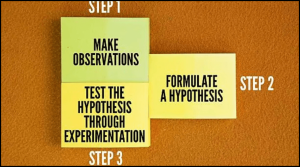
A testable hypothesis, hypothesis testing in research, and how to form a testable hypothesis are core elements of scientific methodology. A testable hypothesis is a precise, measurable, and falsifiable statement that predicts a relationship between variables and can be evaluated using empirical data.
In research, hypotheses transform abstract ideas into structured investigations. Without testability, a hypothesis remains opinion-based and scientifically meaningless. A strong hypothesis improves research validity, reliability, and overall academic quality.
What is a Testable Hypothesis?
A testable hypothesis is:
- A clear prediction about relationships between variables
- A statement that can be verified using empirical data
- A falsifiable claim that can be proven wrong
- A measurable concept using defined variables
- A foundation of scientific reasoning and statistical testing
A hypothesis becomes scientifically valid only when it can be observed, measured, and tested using real-world data Encyclopedia Britannica – Hypothesis.
Importance of Testable Hypothesis in Research
A testable hypothesis:
- Guides research structure
- Improves experimental design
- Enhances data interpretation
- Strengthens academic credibility
- Supports scientific discovery
- Ensures reproducibility of results
Without a testable hypothesis, research becomes directionless and unreliable.
Key Features of a Testable Hypothesis
A strong hypothesis must include:
1. Measurability
All variables must be quantifiable or observable.
2. Clarity
No vague or ambiguous language should be used.
3. Falsifiability
It must be possible to prove it wrong using evidence.
4. Predictive Ability
It must forecast an expected outcome.
5. Theoretical Support
It should be grounded in existing research.
6. Replicability
Other researchers must be able to test it again under similar conditions.
These features ensure scientific credibility and reduce bias in research outcomes.
Difference Between Testable and Non Testable Hypothesis
Testable Hypothesis
- Based on observable evidence
- Uses measurable variables
- Can be tested statistically
Example: “Exercise reduces stress levels in adults”
Non-Testable Hypothesis
- Based on belief or philosophy
- Cannot be measured scientifically
- Lacks empirical validation
Example: “Exercise purifies the human soul”
Only testable hypotheses are accepted in scientific research.
Falsifiable Hypothesis Meaning
The falsifiable hypothesis meaning refers to a hypothesis that can be proven wrong through evidence.
Key insights:
- Introduced by Karl Popper
- Core principle of scientific thinking
- Prevents pseudoscience
- Ensures research accountability
A hypothesis is scientific only if there is a possible outcome that contradicts it.
Types of Hypothesis
1. Null Hypothesis (H₀)
Assumes no relationship between variables.
Example:
“There is no difference in academic performance between online and offline students.”
2. Alternative Hypothesis (H₁)
Assumes a relationship or effect exists.
Example:
“Online students perform better than offline students.”
3. Directional Hypothesis
Predicts the direction of relationship.
Example:
“Increased daily exercise improves cardiovascular health.”
4. Non-Directional Hypothesis
Predicts a relationship but not direction.
Example:
“Exercise affects cardiovascular health.”
5. Simple Hypothesis
A simple hypothesis involves only:
- One independent variable
- One dependent variable
It is easy to test and commonly used in basic experimental research.
Example:
“Increased study time improves test scores.”
Another Example:
“Higher temperature increases ice cream sales.”
Why it is simple:
- Only one cause (study time/temperature)
- One effect (test scores/sales)
- Easy to measure and test statistically
Simple hypotheses are widely used in controlled experiments because they reduce complexity and improve clarity.
6. Complex Hypothesis
A complex hypothesis involves:
- Two or more independent variables
- Two or more dependent variables
It is used in advanced research where multiple factors interact.
Example:
“Study time and sleep quality together improve academic performance and memory retention.”
Another Example:
“Diet, exercise, and sleep collectively reduce obesity and improve mental health.”
Why it is complex:
- Multiple influencing factors
- Multiple outcomes
- Requires advanced statistical methods (regression, multivariate analysis)
Complex hypotheses are common in medical, psychological, and social science research.
How to Form a Testable Hypothesis
Step 1: Identify a Clear Research Problem
A research problem is the specific issue you want to study. It must be focused, not general, and should be something that can be investigated using data.
Explanation:
A vague problem leads to a weak hypothesis. A strong research problem is narrow and measurable.
Example:
- Weak problem: “Education is important”
- Strong research problem: “How does online learning affect student performance in university students?”
Now the problem is:
- Specific (online learning)
- Measurable (student performance)
- Researchable (data can be collected)
Step 2: Conduct Literature Review
A literature review means studying existing research to understand what is already known and what is missing.
Explanation:
It helps you:
- Avoid repeating existing research
- Find gaps in knowledge
- Build a strong theoretical base
Example:
You read studies and find:
- Many studies show online learning is effective
- But few studies focus on “student attention span in online classes”
Step 3: Define Variables
Variables are the core elements of a hypothesis.
Types:
- Independent variable (cause): what you change
- Dependent variable (effect): what you measure
Example:
Research topic: Online learning and performance
- Independent variable → Type of learning (online/offline)
- Dependent variable → Student exam scores
Clear variables = clear hypothesis.
Step 4: Operationalize Variables
Operationalization means converting abstract ideas into measurable form.
Explanation:
You cannot measure “performance” or “stress” directly, so you define how you will measure them.
Example:
Instead of:
- “Student performance”
You define:
- Exam score out of 100
- GPA result
- Assignment grades
Instead of:
- “Stress level”
You define:
- Survey scale (1–10)
- Cortisol level (medical studies)
Step 5: Write a Predictive Statement
Now you form the actual hypothesis using a clear structure.
Standard format:
If X happens, then Y occurs.
Example:
- “If students attend online classes regularly, then their exam scores will improve.”
Or:
- “If screen time increases, then sleep quality decreases.”
Why this is important:
- It shows a clear cause-effect relationship
- It becomes easy to test using data
Step 6: Ensure Falsifiability
A hypothesis must be disprovable using evidence.
Explanation:
If no situation can prove it wrong, it is NOT scientific.
Example:
✔Falsifiable:
- “Online learning improves academic performance”
Because:
- Data might show no improvement or even decline → can disprove it
❌ Not falsifiable:
- “Online learning improves intelligence in unknown ways”
Because:
- Cannot be measured or proven wrong clearly
Step 7: Match Research Design
Your hypothesis must match your research method.
Types of research design:
1. Experimental Design
Used when testing cause and effect.
Example:
- Test group studies online
- Control group studies offline
Hypothesis:
- “Students using online learning score higher than offline learners”
2. Survey Research
Used for opinions or relationships.
Example:
- Collect student responses on learning preference
Hypothesis:
- “Students prefer online learning over traditional classrooms”
3. Correlational Research
Used to find relationships, not causes.
Example:
- Study time vs grades
Hypothesis:
- “There is a relationship between study time and academic performance”
Important Concepts That Strengthen Hypothesis Quality
1. Validity
Meaning:
The hypothesis actually measures what it claims to measure.
Example:
If you say “stress affects performance,” but measure only mood, validity is weak.
✔ Strong valid hypothesis:
- Stress level (measured by survey score) affects exam performance
2. Reliability
Meaning:
Results should remain consistent if repeated.
Example:
If same students tested twice give similar results → reliable hypothesis
3. Variables Control
Meaning:
Keep other factors constant.
Example:
If testing study time and performance:
- Control sleep, diet, and environment
Otherwise results become biased.
4. Research Bias Avoidance
Meaning:
Avoid personal opinions affecting results.
Example:
❌ “Online learning is better because I like it”
✔ “Data shows online learning improves scores by 15%”
5. Statistical Significance
Meaning:
Ensures results are not due to random chance.
Example:
If improvement is only 1%, it may not be significant
But:
- 20% improvement = statistically meaningful
6. Error Reduction (Type I & Type II Errors)
Type I Error:
- False positive (thinking effect exists when it doesn’t)
Type II Error:
- False negative (missing a real effect)
Example:
If you wrongly conclude online learning improves grades → Type I error
Good hypothesis design reduces both errors.
Practical Applications
Testable hypotheses are used in:
- Medicine (drug effectiveness studies)
- Psychology (behavioral analysis)
- Education (learning outcomes)
- Economics (market trends)
- Artificial intelligence (model evaluation)
Example:
Clinical trials test whether a drug reduces symptoms compared to a placebo group.
Academic Support for Hypothesis Development
Writing strong hypotheses is often challenging in academic work. Poor hypotheses lead to weak research design and unclear conclusions.
Professional services like Thesis-Edit.com help researchers:
- Improve hypothesis clarity
- Strengthen academic writing
- Refine research questions
- Ensure methodological accuracy
This support is especially useful for theses, dissertations, and journal publications.
Conclusion
A testable hypothesis is the backbone of scientific research. It converts ideas into measurable, testable predictions that drive empirical investigation. Understanding what is a testable hypothesis, its types, and how to form a testable hypothesis is essential for producing reliable academic work.
From simple hypotheses with one variable to complex hypotheses involving multiple factors, each plays a vital role in advancing knowledge. Ultimately, the strength of research depends on how clearly and scientifically the hypothesis is structured.