Error-free writing is fundamental to academic credibility and professional success. Even minor grammatical, structural, or citation errors can weaken an argument and reduce reader trust. Fortunately, today’s essential writing tools help writers detect mistakes, improve clarity, and maintain academic integrity with greater efficiency. This article outlines ten must-have tools for writers, explaining their practical uses and relevance for students, researchers, bloggers, and professionals.
1. Grammarly

Grammarly is one of the most widely used grammar and style-checking platforms. It employs natural language processing (NLP) to analyze sentence structure, punctuation, clarity, tone, and engagement. For writing tools for beginners, Grammarly offers real-time corrections and explanations, helping users understand their mistakes rather than merely fixing them.
Its advanced features include tone detection and genre-specific suggestions, which are especially useful for academic and professional documents. However, writers should critically assess suggestions, particularly in discipline-specific contexts where passive voice or technical terminology may be appropriate.
Best for: Grammar correction, clarity improvement, tone adjustment.
2. ProWritingAid
ProWritingAid provides in-depth reports on style, readability, sentence variety, and overused words. Unlike basic grammar checkers, it focuses on structural writing issues such as pacing and cohesion.
For researchers and long-form writers, it identifies repetitive phrasing and structural inconsistencies. This makes it one of the best tools for writers working on theses, dissertations, or academic manuscripts.
Best for: Deep stylistic editing and structural analysis.
3. Hemingway Editor
Hemingway Editor evaluates readability by highlighting complex sentences, passive constructions, and unnecessary adverbs. It uses readability formulas such as the Flesch-Kincaid Grade Level to assess clarity.
While academic writing may require technical vocabulary, clarity remains essential. Hemingway helps ensure that arguments are accessible without oversimplification. Among proofreading tools for writers, it excels in improving sentence conciseness.
Best for: Readability enhancement and sentence simplification.
4. Turnitin
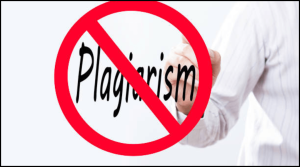
Turnitin is widely used in academic institutions to detect textual similarity. It compares submissions against extensive academic and web databases, generating similarity reports.
Plagiarism detection tools are crucial for safeguarding academic integrity. Research in higher education policy emphasizes their preventive role in reducing unintentional plagiarism. Writers should interpret similarity scores carefully, distinguishing legitimate quotations from problematic overlap.
Best for: Originality verification and academic compliance.
5. Zotero
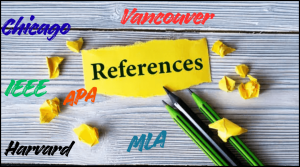
Zotero is a free reference management tool that organizes research sources and automatically generates citations in multiple formats (APA, MLA, Chicago, etc.).
Citation errors are common in academic writing, particularly in long documents. Zotero reduces formatting mistakes and ensures consistency. For graduate students, it ranks among the most essential writing tools for managing extensive bibliographies.
Best for: Citation organization and bibliography automation.
6. Mendeley
Mendeley combines citation management with research networking. It allows users to annotate PDFs, collaborate with peers, and manage references efficiently.
For researchers working in collaborative environments, Mendeley enhances workflow transparency and organization. It is particularly valuable for systematic reviews and multi-author publications.
Best for: Collaborative research and PDF annotation.
7. QuillBot
QuillBot assists with paraphrasing and sentence restructuring. It offers multiple writing modes that adjust tone and complexity.
While paraphrasing tools can improve clarity, writers must ensure that meaning remains accurate and properly cited. Used responsibly, QuillBot supports non-native English speakers and students refining their drafts.
Best for: Paraphrasing assistance and sentence restructuring.
8. Microsoft Word Editor
Microsoft Word’s built-in Editor provides grammar, spelling, and style suggestions. Because Word remains the standard word-processing platform in academia and business, its integrated editing features are highly accessible.
For many writers, it serves as the first line of error detection before deeper proofreading. Though not as advanced as specialized software, it remains one of the tools every writer should use for preliminary review.
Best for: Basic grammar and spelling checks.
9. Scrivener
Scrivener is designed for long-form writing projects. It allows users to break documents into sections, reorganize content easily, and track progress.
Organizational clarity significantly reduces structural errors. For thesis writers and authors managing extensive research, Scrivener enhances macro-level coherence.
Best for: Structuring large writing projects.
10. Professional Academic Editing Services (e.g., thesis-edit.com)
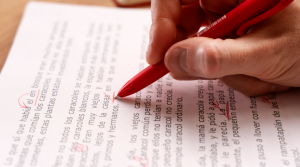
While digital platforms offer automated support, professional human editing remains indispensable for high-stakes academic work. Services such as thesis-edit.com provide expert proofreading, structural editing, and formatting assistance tailored to academic standards.
Professional editors address discipline-specific conventions, argument clarity, and publication readiness. Combining automated tools with expert human review ensures the highest level of accuracy and professionalism.
Best for: Thesis, dissertation, and journal-ready editing.
Why These Are Must-Have Tools for Writers
Each of these ten tools addresses a distinct dimension of writing: grammar accuracy, readability, originality, citation management, structure, and professional refinement. Together, they form a comprehensive toolkit that supports writers at every stage.
Grammar and readability platforms help beginners build foundational writing skills. Citation managers and plagiarism detectors safeguard academic credibility for more experienced scholars. In advanced projects, professional editing services add the final layer of quality assurance.
Importantly, no tool replaces critical thinking or subject expertise. Rather, these technologies function as extensions of scholarly discipline. Writers should evaluate suggestions thoughtfully and maintain full responsibility for their work.
Conclusion
Producing error-free writing requires more than strong ideas; it demands precision, clarity, and adherence to academic standards. The ten tools outlined above represent the best tools for writers seeking accuracy and professionalism. From grammar correction to citation management and professional proofreading, these essential writing tools streamline the writing process and reduce avoidable errors.
By integrating these proofreading tools for writers into a structured workflow—and complementing them with expert editing support from thesis-edit.com—writers can significantly enhance the quality, credibility, and impact of their work. In today’s competitive academic and professional environment, leveraging the right tools is not optional; it is essential.