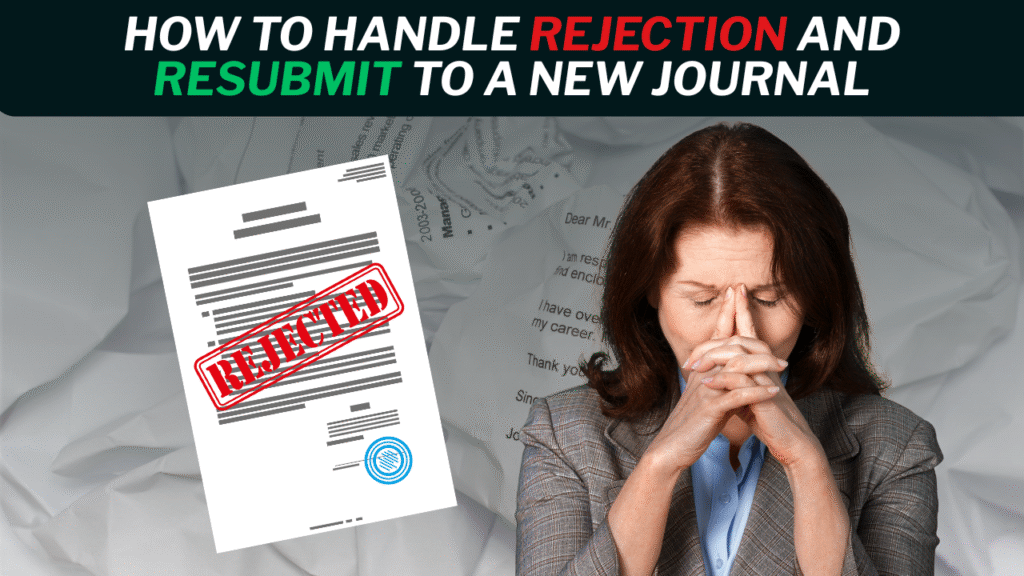
Academic publishing is a rigorous process, and journal rejection is an inevitable part of a researcher’s journey. While receiving a rejection can be disheartening, it is important to recognize that even the most esteemed scholars face rejection at some point in their careers. The key to success lies not in avoiding rejection but in knowing how to handle it effectively, learn from it, and strategically resubmit your manuscript to an appropriate journal. This article provides a comprehensive guide on dealing with manuscript rejection, revising and resubmitting your work, and ultimately turning rejection into success.
Understanding Journal Rejection
Journal rejection can occur at different stages, and understanding why a manuscript was rejected is crucial to improving it before resubmission. Rejections generally fall into two broad categories:
Desk Rejection: This occurs when the editor rejects the manuscript without sending it for peer review. Common reasons for desk rejection include:
- The manuscript does not align with the journal’s scope.
- Failure to adhere to submission guidelines.
- Poorly written or formatted content.
- Lack of originality or insufficient contribution to the field.
Rejection After Peer Review: This happens when the manuscript is reviewed by experts but is ultimately rejected. Some common reasons include:
- Weak methodology or experimental design.
- Insufficient or inappropriate data analysis.
- Lack of novelty or relevance.
- Failure to adequately engage with existing literature.
- Poor organization, clarity, or language issues.
Understanding the specific reasons for rejection allows you to make informed decisions on how to proceed.
Common Reasons for Rejection and How to Address Them
| Reason for Rejection | Recommended Action |
| Misalignment with journal scope | Identify a more suitable journal and revise accordingly |
| Poor language and clarity | Seek professional editing and proofreading services |
| Weak methodology | Strengthen research design and provide more details |
| Insufficient data analysis | Perform more rigorous statistical analysis |
| Lack of novelty | Highlight unique contributions and findings |
| Failure to engage with literature | Add relevant references and discuss prior research |
| Formatting and guideline issues | Ensure adherence to journal submission requirements |
Emotional and Professional Response to Rejection
Handling rejection effectively requires both an emotional and professional approach:
- Allow Time to Process the Rejection: It is natural to feel disappointed, but avoid reacting immediately. Give yourself time to absorb the feedback before making any decisions.
- Read the Rejection Letter Carefully: Review the comments from editors and reviewers to identify the key issues raised.
- Differentiate Between Constructive and Subjective Criticism: While some feedback is useful for improving your manuscript, other comments may be subjective. Focus on constructive criticism and actionable points.
- Seek a Second Opinion: Discuss the feedback with a colleague, mentor, or co-author to gain a different perspective on the rejection and suggested improvements.
How to Proceed After a Rejection
After processing the rejection, you need to decide on the best course of action:
Deciding Whether to Appeal the Decision
In rare cases, you may have valid grounds to appeal a rejection, such as if you believe the reviewers misunderstood your work or there were procedural errors. However, appeals are generally discouraged unless there is strong evidence that the rejection was unjustified.
Revising and Resubmitting to the Same Journal
If the rejection letter provides constructive feedback and suggests the possibility of resubmission after significant revision, consider addressing the reviewers’ concerns and resubmitting to the same journal.
Clearly respond to each reviewer’s comment in a cover letter, explaining how you have revised the manuscript accordingly.
Submitting to a Different Journal
If the manuscript was outright rejected without an option to resubmit, it is best to find another suitable journal. This involves:
- Selecting the Right Journal: Choose a journal that aligns with your research scope, audience, and impact factor.
- Adapting Your Manuscript to Fit the New Journal: Modify formatting, referencing style, and word limits according to the new journal’s guidelines.
- Addressing Previous Reviewers’ Comments: Even if you submit to a new journal, revising your manuscript based on prior feedback increases the chances of acceptance.
Best Practices for a Successful Resubmission
To enhance your chances of acceptance in a new journal, follow these best practices:
- Improve Clarity and Organization
- Ensure the introduction clearly states the research problem, objectives, and significance.
- Strengthen the methodology section to provide a clear, reproducible description of how the research was conducted.
- Present results logically and discuss them in the context of existing literature.
- Enhance Language and Presentation
- If necessary, seek professional editing services to improve grammar, clarity, and readability.
- Use clear, concise language to articulate complex ideas effectively.
- Write a Strong Cover Letter
When submitting to a new journal, a well-crafted cover letter should:
- Clearly explain why your manuscript is a good fit for the journal.
- Highlight the key contributions of your research.
- Briefly mention any improvements made based on previous feedback.
Turning Rejection into Success
Rejection is not the end of the road—it is a stepping stone toward improvement. Many manuscripts that initially face rejection ultimately get published in reputable journals after careful revision and resubmission. By embracing feedback, selecting the right journal, and making necessary improvements, you can turn a rejected manuscript into a published success. Stay persistent, keep refining your work, and view each rejection as an opportunity for growth in your academic career.
Get Professional Help for a Successful Resubmission
If you want to maximize your chances of getting published, consider seeking professional assistance. Thesis-Edit.com offers expert editing, proofreading, and journal resubmission services tailored to your needs. Their team of academic specialists ensures your manuscript is clear, polished, and ready for submission to top-tier journals. Don’t let rejection hold you back—refine your work and resubmit with confidence. Visit Thesis-Edit.com today and take the next step toward academic success.